General
Coding Projects
Links
Other Pages Here
Joshua Tauberer's Homepage
This is the home page of Joshua Tauberer <>, University of Pennsylvania graduate student in linguistics and software "technologist" interested in civics, the semantic web, and scientific computing.
About Me
A few favorite quotes:

"As certain as my heart is ticking, I'm certain no living chicken // Has ever so clearly commanded a living cook before // With an utterance so clear and shocking that even I could not ignore. // Quoth the chicken, 'Fry some more.' " --- Good Eats

"Yields falsehood when preceded by its quotation! Yields falsehood when preceded by its quotation!" Achilles to Tortoise (in "Gödel, Escher, Bach" by Douglas Hofstadter)

"If the crib's on fire you don't speculate the baby's flame retardant." -- Al Gore on global warming

"Strike up the klezmer and start acting like a man. You're about to have a truth-mitzvah." -- Stephen Colbert, The Colbert Report

I am a fourth-year graduate student at the University of Pennsylvania in the linguistics Ph.D. program. My primary academic interest is currently phonetics & models of OT grammar acquisition, but I'm also interested in formal syntax and semantics.

My main hobby is using technology to improve transparency in the U.S. Congress. In my spare time I run GovTrack.us, a website that tracks what's happening in Congress. It basically runs itself. I also contribute to The Open House Project and am behind the scenes in a few other civics-related projects.

My interests in transforming government data and linguistic semantics has lead me to an interest in the Semantic Web. The Semantic Web, in combination with some advances in linguistic technology, should dramatically change the way we interact with information. In that spirit, I maintain a few Semantic Web resources at rdfabout.com.

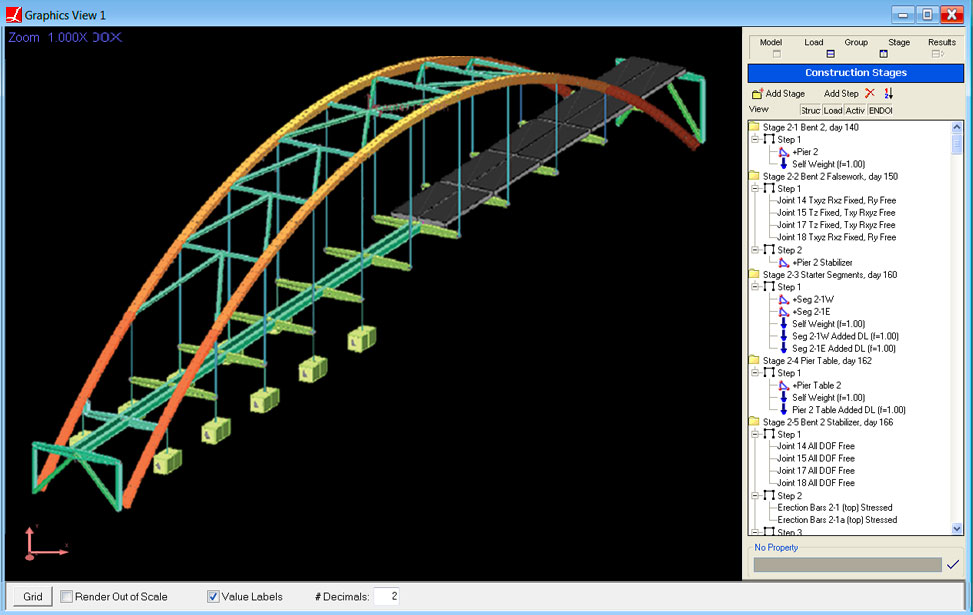
I spend a lot of my time on computer software. Some of my other software projects are listed below. My "third" life is as a component of the structural engineering software company LARSA, which I've been with for almost eight years now.

Recently I've also found a new interest in social responsibility, especially issues related to food. I am a locavore: I try to purchase locally grown and responsibly raised food when I can.


Resume


Change Congress
Software Projects

These are all ongoing projects, though I don't spend much time on all of them.

Civics/Politics

GovTrack.us is a nexus of information about the United States Congress, primarily tracking the status of legislation. GovTrack lets you monitor your representatives and legislation in topics that interest you through email updates, RSS feeds, etc. The site was mentioned in the NY Times and the Washington Post. The site pretty much runs itself. Some 15,000 people visit the site each day. (Since 2003.)

Linguistics

The Penn Lambda Calculator is a linguistic semantics pedagogical tool made in conjunction with Lucas Champollion and Maribel Romero. (Since 2006.)

Praat-Py is an extension to the Praat program for phonetic analysis that allows scripts to by written in Python. (Since 2007.)

Technology (for Technology's Sake)

Sender Verification Extension is a Mozilla Thunderbird extension for verifying the domain name claimed in the From: address of emails using SPF and DomainKeys, as a tool to combat phishing. I'm not actively developing the extension much, mainly just maintaining it. Apparently some 9,000 people are using the extension! (Since 2004.)

SemWeb .NET Library is a .NET library written in C# for working with RDF data for the Semantic Web. (Since 2005.)

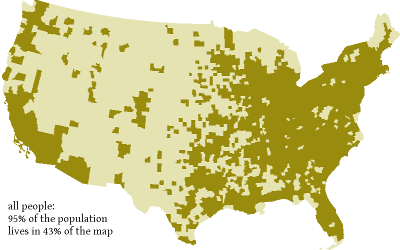
U.S. Census as RDF: A 1-billion triples RDF database of U.S. Census statistics, basically the largest open, linked, and dereferencable RDF database of real-world information that exists.

Other projects that I no longer maintain: Diff C# library, PerlSharp (Perl interpreter bindings), SvnWebView (CGI/Perl script to browse a SVN repository).

Publications and Conference Papers/Talks

On government transparency:

  • Talk: Jan. 15, 2008. Open government data policy and a semantic future for civics. Presented in Civics in the Cloud panel at "Computing in the Cloud", Center for InfoTech Policy, Princeton University. text | slides | watch
  • Article: June 12, 2007. Improve Databases, in The Hill.
  • Article: Feb. 14, 2007. Legislators Should Live in a Glass House, in The American (online).

On the Semantic Web, some of which are from my short-lived column on xml.com in 2006.

Linguistics:

  • (Accepted talk: "Predicting Intrasentential Pauses: Is Syntactic Structure Useful?" for Speech Prosody 2008)
  • Goldilocks Meets the Subset Problem: Evaluating Error Driven Constraint Demotion for OT Learning. To appear in the U. Penn Working Papers of Linguistics 15.1, 2009, Proceedings of the 32nd Penn Linguistics Colloquium. Slides
  • Champollion, L., J. Tauberer and M. Romero. 2007. “The Penn Lambda Calculator: Pedagogical Software for Natural Language Semantics”, in T. Holloway King and E. M. Bender (eds.), Proceedings of the Grammar Engineering across Frameworks (GEAF) 2007 Workshop. CSLI On-line Publications.
  • and volumes of the U. Penn Working Papers in Linguistics that I've edited:

  • Joshua Tauberer, Aviad Eilam, and Laurel MacKenzie (Eds.). 2008. Proceedings of the 31st Annual Penn Linguistics Colloquium. Penn Working Papers in Linguistics, Vol. 14.1, Philadelphia, PA.
  • Tatjana Scheffler, Joshua Tauberer, Aviad Eilam, and Laia Mayol (Eds.). 2007. Proceedings of the 30th Annual Penn Linguistics Colloquium. Penn Working Papers in Linguistics, Vol. 13.1, Philadelphia, PA.
  • Aviad Eilam, Tatjana Scheffler, and Joshua Tauberer. (Eds.). 2006. Proceedings of the 29th Annual Penn Linguistics Colloquium. Penn Working Papers in Linguistics, Vol. 12.1, Philadelphia, PA.
  • Sudha Arunachalam, Tatjana Scheffler, Sandhya Sundaresan, and Joshua Tauberer (Eds.). 2005. Proceedings of the 28th Annual Penn Linguistics Colloquium. Penn Working Papers in Linguistics, Vol. 11.1, Philadelphia, PA.

Then there's my Daily Princetonian articles (2000-2003) from my college days...

Things I like

I like old maps, "Scrubs", "The Colbert Report", the em-dash, and the expression "be that as it may". Oh, and the "hand" "quote" "thing." Also...

Philosophy of Mind

I've always been a little troubled by the fact that I exist. Sometimes when I think about it too much I actually feel a bit of surprise when I realize again that, in fact, I am here. (More of my ramblings...)

Books I've Enjoyed

Here are some books I recommend on a variety of subjects that interest me.

Music

  • Barenaked Ladies
  • Fastball
  • Third Eye Blind
  • Vertical Horizon
  • Goo Goo Dolls
  • Green Day
  • Avril Lavigne (ok, having a pink-colored CD is a bit embarassing...)
Eddie Izzard
Eddie Izzard [try Dress to Kill or Glorious]

Some Favorite Video Clips:

How corporations subjugate the masses

Complaining is easy and finding a solution is tough, I know, but there are a lot of clearly-ridiculously-wrong things in the world that corporations hide from individuals, and in these cases we can't make progress until we first identify the problems. Here are some things that ought to be changed:

These are thoughts in progress.

  • Big media influences politics to create money. As one example of this, I reported on my suspicion that MSNBC's Oct. 30, 2007 Democratic presidential debate was crafted to allocate time to candidates in proportion to their latest poll numbers. Obviously candidates with less time make less of an impression on the public, and thus are actively put at a disadvantage by the system. When the pundits later ask "who was the winner" of the debate, their corporate cohorts have already forced the answer in favor of those candidates already in the lead. And, to be even more cynical, by limiting the number of viable candidates, they increase the power of their campaign contributions that they have made to leading candidates.
  • Credit card restrictions on merchants lead to an inverted redistribution of wealth. "[C]onsumers who use the cheapest payment systems [i.e. cash] are likely to end up paying more, and consumers who use expensive payment systems [i.e. credit cards] are likely to end up paying less [than they would if merchants adjusted prices according to the cost of processing the different types of payments they receive, contra bank-imposed merchant restrictions]. The effect is a sub rosa cross-subsidization of those using the most expensive payment systems by those using the cheapest. This cross-subsidization is highly regressive because the poorest Americans tend to be cash-only consumers." Adam Levitin (2007): Priceless? The Social Costs of Credit Card Merchant Restraints) (The point is also made that the restrictions limit the purchasing power of food stamps, being cheap for merchants to process, which means that taxpayers as a whole are also subsidizing the banks and the rewards. Then, and this is my point not his, considering the popularity of airlines rewards, taxpayers are actually subsidizing the airline industry through this channel.)

FOAF RDF file